The CEFR and Structured Literacy in French as a Second Language

The resources in this section draw on current evidence from the fields of literacy, language development, the Science of Reading, and second language acquisition, as well as Ontario’s curriculum and policy documents. Together, these foundations support the development of oral language, reading and writing so that students can communicate effectively and transfer their learning across a variety of contexts and subject areas.
Guided by the Common European Framework of Reference for Languages (CEFR), FSL instruction in Ontario places authentic communication at the heart of learning. Through rich opportunities for comprehension, production and interaction, students develop their communicative competence while drawing on their experiences, prior knowledge and linguistic repertoires to build new learning. This approach supports meaningful language use and promotes the transfer of learning across subject areas and real-world contexts.
At the same time, evidence from the Science of Reading highlights the importance of developing both word recognition and language comprehension, two interdependent components that underpin skilled reading. Students benefit from explicit, systematic, and sequential instruction in phonemic awareness, decoding, encoding, and fluency while simultaneously building vocabulary, background knowledge, oral language, and verbal reasoning. Together, these elements contribute to reading comprehension, written communication, and overall literacy development.
The CEFR and structured literacy are complementary. The CEFR provides a framework for developing communicative competence through meaningful language use, while structured literacy helps ensure that students acquire the foundational skills necessary to read and write with accuracy, automaticity, and confidence. Together, they support students in becoming confident and proficient communicators, readers, and writers in French.
Continuous assessment plays a critical role in informing instruction. Assessment data and ongoing observations help educators identify students’ strengths and needs and guide decisions related to whole-class instruction, small-group teaching, and intentionally planned learning opportunities. This responsive approach promotes practice, consolidation, and transfer while supporting all learners in progressing toward curriculum expectations.
Although these principles apply across all grades, their implementation varies according to students’ age, linguistic profile, entry point into the French Immersion program, and amount of exposure to French. Instruction should therefore be responsive, flexible, and differentiated, providing multiple entry points that enable all learners to access, practise, and apply new learning successfully.
The following three sections—Oral Language, CEFR and Backward Design; Word Recognition and Reading Fluency; and Small-Group Instruction and Intentional Learning Opportunities—highlight complementary practices that work together to support the development of communicative competence and literacy in French as a Second Language.
Key resources:
French as a Second Language and the CEFR
- Curriculum – French as a Second Language
- Common European Framework of Reference for Languages (CEFR) EN | FR
Literacy in French Immersion
- French Immersion Adaptation of ONlit’s overview of Kindergarten Curriculum – EN | FR
- FI Continuum K-1 linked to Kindergarten and Language 1-8 curriculum documents
Documents to support planning
Building knowledge and promoting transfer
Spoken language is at the heart of all learning and forms the foundation for literacy development. By drawing on the principles of the Common European Framework of Reference for Languages (CEFR) and backward design, educators can identify the knowledge, vocabulary, linguistic structures and learning experiences that students need to communicate, learn and succeed in French. Developing comprehension, production, and interaction—both oral and written—helps expand vocabulary, build knowledge, strengthen literacy skills, and develop verbal reasoning. By making expectations explicit and providing authentic communication situations, this approach promotes the transfer of learning across subject areas and contexts.
Guiding question:
How do comprehension, production and interaction—supported by the development of vocabulary, knowledge and linguistic structures—contribute to communicative competence, literacy and learning across a variety of contexts and subject areas?
Resources related to this section:
- Nous sommes gentils : Cycle d’apprentissage M/1 (K/1 Learning Cycle Example)
- Example – Weekly lesson plan for Grade 1 (with Nous sommes gentils)
- Gabarit de la planification pour la lecture à voix haute
- Tier 1: Oral Language and Comprehension Reflection Tool EN | FR
Nous sommes gentils: An example in action
Developing automaticity to support comprehension
Accurate and automatic word recognition is a foundational component of skilled reading and literacy development. Through explicit, systematic and sequential instruction, students gradually develop the knowledge and skills necessary to become competent readers and writers. The development of phonemic awareness, decoding, encoding and reading fluency enables students to identify words accurately and efficiently, thereby freeing cognitive resources for comprehension, communication and higher-level thinking. This evidence-based approach promotes the sustainable development of reading and writing skills and supports success across all subjects. Providing equitable access to evidence-based literacy instruction helps ensure that all learners, including students enrolled in French Immersion programs, have the opportunity to develop the foundational skills necessary for reading success.
Guiding question:
How does explicit, systematic and sequential instruction in phonemic awareness, decoding, encoding and fluency enable students to develop automatic word recognition to support comprehension, writing and learning in a variety of contexts?
Resources related to this section:
- Son-au-graphe (scroll to bottom of webpage and click ‘View Teaching Resources’)
- Son-au-graphe (Implementation Checklist)
Consolidating learning and meeting needs
Students need frequent opportunities to practise, apply and consolidate the knowledge and skills taught through purposeful, engaging and differentiated tasks. Small-group instruction, informed by assessment data and ongoing observation, enables a targeted response to students’ strengths, needs and learning profiles. At the same time, intentionally planned learning opportunities provide authentic contexts to apply the knowledge and strategies learned, increase independence and foster engagement. This flexible approach supports the consolidation of learning, differentiated instruction and each student’s progress towards meeting literacy expectations.
This process also supports the development of subject-specific knowledge, academic vocabulary and linguistic structures that enable students to understand, communicate, and learn effectively in French.
Guiding question:
How do targeted small-group teaching and intentionally planned learning opportunities enable students to practise, apply and consolidate their learning in word recognition and language comprehension, whilst meeting their specific needs?
Resources related to this section:
- Invitations for learning – Overview EN | FR
- Invitations for learning – Nous sommes gentils EN | FR
- Reflection tool for small-group instruction EN | FR
- Targeted intervention using Son-au-graphe
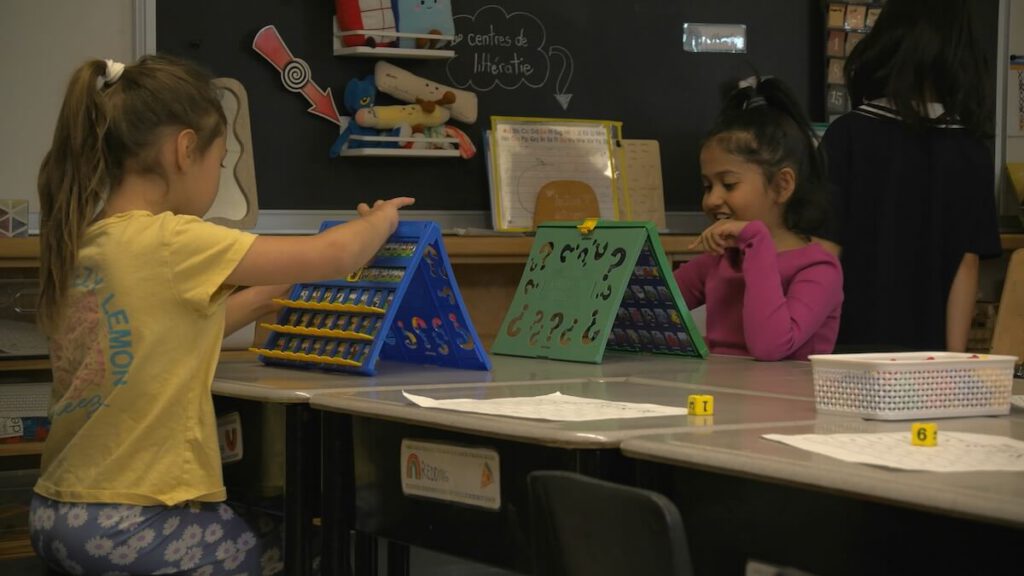
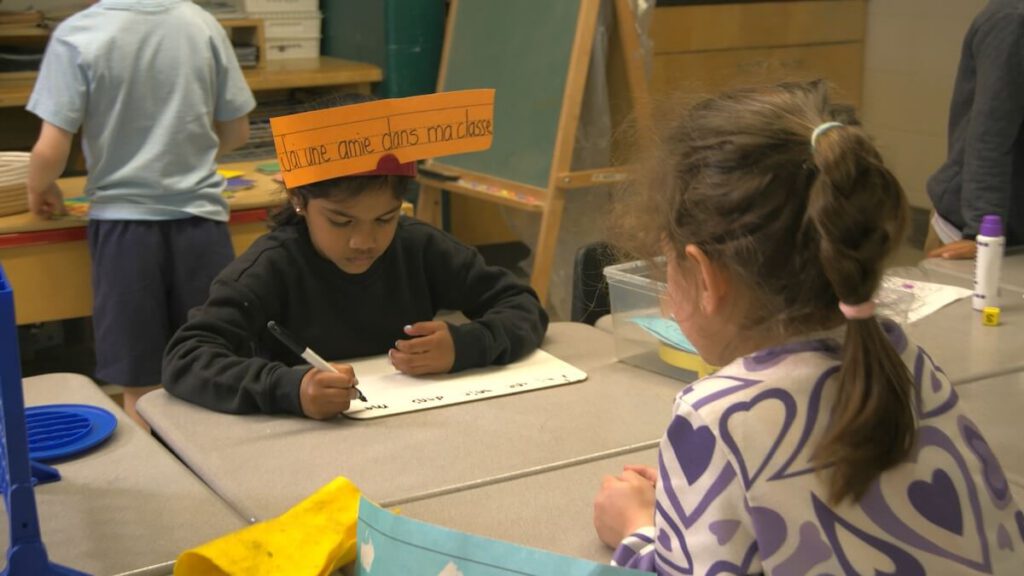
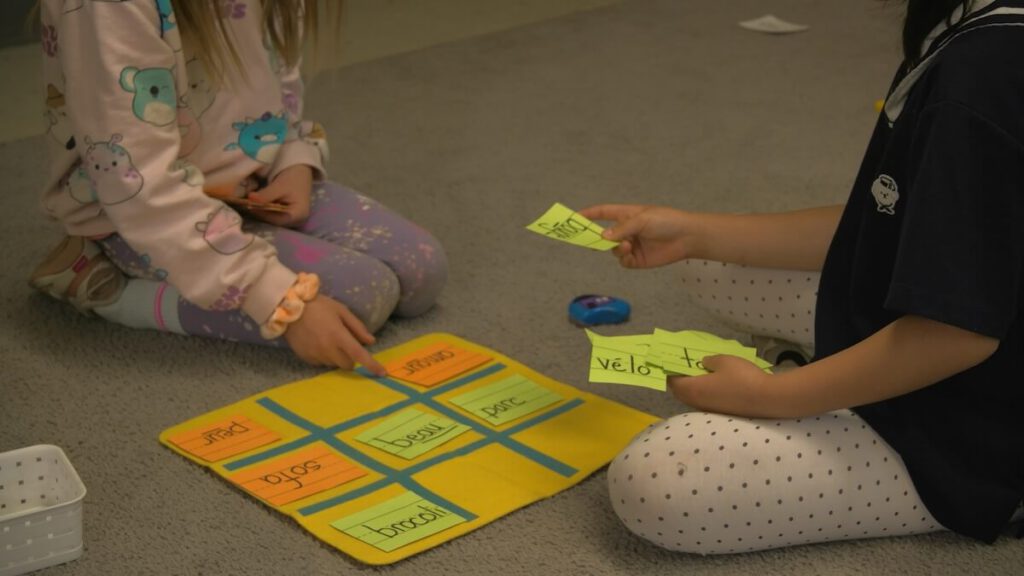
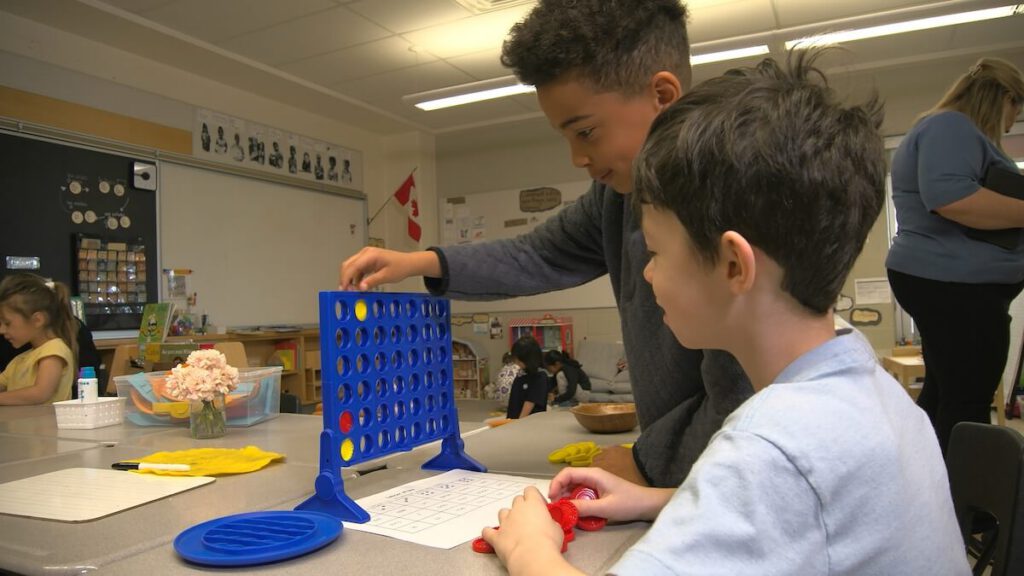
Q: What impact has explicit, systematic instruction had on teaching and learning in your practice?
Q: Some educators have raised concerns about the potential impact of explicit, systematic instruction on oral language development. What have you noticed?
Q: What challenges have you encountered while making this instructional shift?
Q: What advice would you give to someone who is just beginning this journey?
Q: What steps have you taken to partner with parents, particularly those who are concerned about their child’s reading development?
Q: How have you balanced your view of the value of play-based learning with the use of explicit, systematic instruction?